

Best Time to Visit Myrtle Beach: A Month-by-Month Guide (2027)
Myrtle Beach gets over 20 million visitors a year. And most of them show up during the exact same 10-week window. The best time to visit Myrtle Beach depends entirely on what you’re after — perfect beach weather, the cheapest hotel rates, the fewest crowds, or the biggest events. And those four things almost never line up at the same time.
June through August delivers the warmest ocean water and the longest beach days, but you’ll share the Grand Strand with peak-season crowds and peak-season prices. September and October hand you warm weather with half the people. April and May give you the driest skies and the best deals on accommodations before peak season kicks in.

This guide breaks it all down — month by month, season by season — so you can pick the ideal time to visit Myrtle Beach, South Carolina for your trip.
Quick Answer: When Is the Best Time to go to Myrtle Beach?
The best time to visit Myrtle Beach for most travelers is late April through May or September through mid-October.
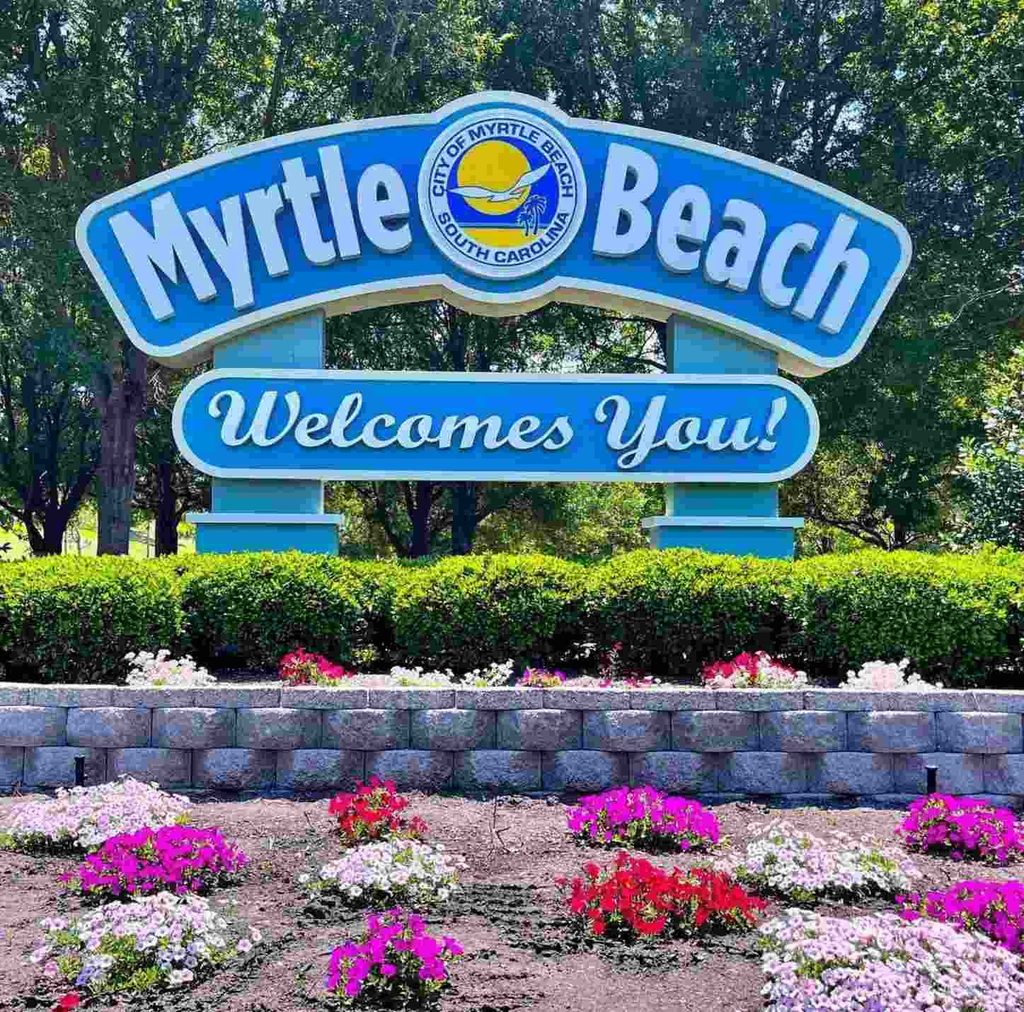
These shoulder season windows give you warm weather (highs in the 70s to low 80s), comfortable ocean water for swimming, significantly lower hotel rates than peak summer, and a fraction of the crowds. You’ll still find every restaurant, attraction, and beach open — without the gridlock on Kings Highway or the fight for a parking spot at the boardwalk.
Here’s the season-by-season snapshot:
| Season | Months | Avg High | Crowds | Best For |
|---|---|---|---|---|
| Spring | Mar – May | 65°F – 78°F | Low to moderate | Families, golf, value |
| Summer | Jun – Aug | 84°F – 87°F | Peak | Beach days, water sports |
| Fall | Sep – Nov | 66°F – 82°F | Low to moderate | Budget trips, golf, calm beaches |
| Winter | Dec – Feb | 56°F – 60°F | Very low | Snowbirds, holiday events |
Now let’s dig into the details.
Myrtle Beach Weather by Month
Weather is the single biggest factor in choosing the best time to visit Myrtle Beach. Here’s what the National Climatic Data Center averages actually look like:
| Month | Avg High | Avg Low | Rainfall | Muggy Days | Ocean Temp |
|---|---|---|---|---|---|
| January | 56°F | 40°F | 3.4 in | 0 | 50°F |
| February | 58°F | 42°F | 3.6 in | 0 | 50°F |
| March | 65°F | 48°F | 3.5 in | 0 | 55°F |
| April | 72°F | 55°F | 3.0 in | 2 | 62°F |
| May | 78°F | 63°F | 3.0 in | 12 | 70°F |
| June | 84°F | 71°F | 4.0 in | 23 | 77°F |
| July | 87°F | 74°F | 4.7 in | 29 | 80°F |
| August | 86°F | 73°F | 5.6 in | 28 | 82°F |
| September | 82°F | 68°F | 5.4 in | 19 | 79°F |
| October | 74°F | 58°F | 3.7 in | 7 | 72°F |
| November | 66°F | 48°F | 2.8 in | 2 | 63°F |
| December | 60°F | 42°F | 3.2 in | 1 | 55°F |
Key takeaways from the data:
April and May are the driest months with the fewest rain showers. July and August are the hottest and most humid — nearly every day qualifies as “muggy.” September and October stay warm but the humidity drops sharply. November is the driest month overall with just 2.8 inches of rainfall.
My honest take: The weather data tells a clear story. If good weather with comfortable humidity is your priority, the best time to visit Myrtle Beach is April, May, or October. You get warm days without the oppressive mugginess that makes July and August feel like walking through soup. The “muggy days” column is the one most people overlook — and it’s the one that matters most for actually enjoying time outdoors on the Grand Strand.
Best Time to Visit Myrtle Beach for Swimming
The Atlantic Ocean water temperature along the Grand Strand follows a predictable curve, and it determines when swimming is actually comfortable versus technically possible.
The best time to go to Myrtle Beach for swimming is June through September, when ocean water temperatures stay between 77°F and 82°F. August is the warmest month for ocean water at around 82°F.
Here’s how the swimming season breaks down:
- Too cold to swim (December – March): Water temps between 50°F and 55°F. You can walk the beach, but swimming is out unless you have a wetsuit.
- Chilly but swimmable (April – May): Water temps climb from 62°F to 70°F. May is when most people start getting in the water, though it’s still bracing.
- Prime swimming (June – September): Water temps between 77°F and 82°F. This is the ideal window for beach days, boogie boarding, and water sports.
- Late-season swimming (October): Water temps around 72°F. Still swimmable on warm days, and the beach is far less crowded than summer.
- Cooling down (November): Water drops to 63°F. Possible on sunny afternoons but not comfortable for most people.
My honest take: Late September swimming is one of the Grand Strand’s best-kept secrets. The water is still 79°F, the air temp is in the low 80s, and the summer crowds have evaporated. You can actually find an empty stretch of beach — something that’s nearly impossible in July. If swimming is a major priority, September gives you everything June does with none of the crowds.
Best Time to Visit Myrtle Beach by Season
Spring (March – May): Best for Families and Value
Spring is the sweet spot for families visiting Myrtle Beach, especially if you have school-age kids on spring break.
March brings average highs around 65°F — warm enough for the boardwalk, mini-golf, and outdoor dining, but too cool for serious beach time. Hotel rates are still near winter lows, making it one of the cheapest times to visit Myrtle Beach.
April is when things start to click. Highs reach the low 70s, the azaleas bloom across the Grand Strand, and seasonal attractions reopen. Rainfall drops to just 3.0 inches — tied with May for the driest month. The crowds are still light, and hotel rates are moderate.
May is the last month before peak-season pricing kicks in. Highs hit 78°F, the ocean warms to 70°F, and you get pre-memorial-day warmth without the Memorial Day weekend surge. This is arguably the best month to visit Myrtle Beach if you want warm weather, low crowds, and good rates.
Spring events to catch:
- Myrtle Beach Marathon (March)
- St. Patrick’s Day Festival and Parade (March)
- World Famous Blue Crab Festival, Little River (May)
Watch out for: Spring break crowds in late March and early April. If you can travel outside the typical spring break window, you’ll find even fewer people and better hotel deals.
Summer (June – August): Best for Beach Days and Water Sports
Summer is peak season in Myrtle Beach, and there’s a reason. The beach is the main attraction, and summer is when the Atlantic Ocean is warmest and the days are longest.
June kicks off with highs in the mid-80s and ocean water around 77°F. The Carolina Country Music Fest (CCMF) typically lands in early June and draws massive crowds. If you’re not there for CCMF, the first two weeks of June offer slightly lower rates than July.
July is the hottest month, with average highs of 87°F and nearly every day classified as muggy. The Fourth of July in Myrtle Beach is enormous — the Murrells Inlet Boat Parade, fireworks along the boardwalk, and packed beaches. Hotel rates peak during the week around Independence Day.
August stays hot (86°F highs) with the most rainfall of any month at 5.6 inches. Afternoon thunderstorms are common but usually pass within an hour. Late August sees a slight dip in crowds as families head home for school, making the last week of August a sneaky-good time to visit.
Summer events to catch:
- Carolina Country Music Fest (June)
- Fourth of July celebrations along the Grand Strand
- Murrells Inlet Boat Parade (July 4th)
- Myrtle Beach Pelicans baseball games (all summer)
My honest take: I won’t sugarcoat it — summer in Myrtle Beach is hot, humid, and crowded. The traffic on Highway 17 and Kings Highway can be brutal. The boardwalk is shoulder-to-shoulder most evenings. If your only option is summer, book a weekday stay rather than a weekend, arrive before Memorial Day or after mid-August, and embrace the early morning beach walks before the crowds arrive. The best time to go to the Myrtle Beach boardwalk in summer is before 10 AM or after 7 PM.

Fall (September – November): Best for Budget Trips and Golf
Fall is the underrated season in Myrtle Beach. The weather is still warm, the crowds thin dramatically after Labor Day, and hotel rates drop to shoulder-season levels.
September is the stealth pick for best month to visit Myrtle Beach. Highs average 82°F, the ocean is still 79°F, and the summer crowds are gone. The post-Labor Day calm is real — restaurants have shorter waits, the beach has open space, and midweek hotel discounts are significant.
October brings the clearest skies of the year (64% clear or mostly clear), average highs of 74°F, and ocean water around 72°F. This is the best time to visit Myrtle Beach for golf — courses are in prime condition, rates are lower, and the weather is ideal for 18 holes. October is also when the Atalaya Arts and Crafts Festival and the Pawleys Island Festival of Music and Art bring cultural events to the south end of the Grand Strand.
November is cooler (highs around 66°F) but delivers the driest weather of the year at just 2.8 inches of rainfall. The Nights of a Thousand Candles at Brookgreen Gardens starts in late November and runs through early January — it’s one of the most magical holiday events on the South Carolina coast.
Fall events to catch:
- National Shag Dance Championships (September)
- Atalaya Arts and Crafts Festival, Huntington Beach State Park (September)
- Little River ShrimpFest (October)
- Pawleys Island Festival of Music and Art (October)
- Nights of a Thousand Candles at Brookgreen Gardens (late November – January)

Watch out for: Myrtle Beach Bike Week Fall Rally typically happens in late September or early October. If large motorcycle rallies aren’t your thing, check the fall rally dates before booking. If you want to avoid bike week crowds entirely, the second and third weeks of October are usually clear.

Winter (December – February): Best for Snowbirds and Holiday Events
Winter is the quietest time on the Grand Strand, and that’s exactly why some people love it.
December brings average highs of 60°F, holiday light displays, and a peaceful beach that feels worlds away from the summer frenzy. The Dickens Christmas Show & Festivals and Winter Wonderland at the Beach are popular holiday events. New Year’s Eve celebrations include A Southern Times Square New Year’s Eve Celebration in downtown Myrtle Beach.
January is the coldest month (56°F average high, 40°F average low) and the quietest month for tourism. Hotel rates are at their lowest. Restaurant Week South Carolina sometimes falls in January, offering prix fixe deals at Grand Strand restaurants.
February starts to warm slightly (58°F highs) and snowbird visitors from the Northeast begin filling long-term rental properties. The Myrtle Beach World Amateur golf tournament is held in spring but registration opens months early — if you’re a golfer, this is when to start planning.
My honest take: Winter isn’t for beach lovers. But for retirees, snowbirds, and anyone who wants rock-bottom hotel rates with mild-by-Northern-standards weather, a winter quiet shoreline visit can be surprisingly pleasant. The seafood restaurants are just as good in January as they are in July — and you can actually get a table at places like Gulfstream Cafe or Sarah J’s without a 90-minute wait.
Hurricane Season in Myrtle Beach
Hurricane season runs from June 1 through November 30. That’s right — it overlaps with most of the best visiting months.
Here’s the reality check:
- June through mid-August: Historically low hurricane risk for the Grand Strand. Most tropical activity stays in the Gulf or Caribbean.
- Late August through October: This is the peak of hurricane season. The biggest storms that have affected Myrtle Beach and the Grand Strand have historically hit in September and October.
- November: Hurricane risk drops sharply by mid-November.
Should you avoid Myrtle Beach during hurricane season? No. Millions of people visit between June and November every year without any hurricane issues. Modern forecasting gives several days of advance warning, and most tropical systems pass offshore.
What to do: Buy travel insurance if you’re visiting between August and October. Book refundable hotel rates. Keep an eye on the forecast the week before your trip. That’s it.
My honest take: I’ve been on the Grand Strand during hurricane season more times than I can count. The vast majority of visits are completely unaffected. The trade-off for slightly higher storm risk in September and October is dramatically lower crowds, lower prices, and gorgeous weather on the 95% of days when no tropical system is anywhere near South Carolina. Don’t let hurricane season scare you away from a fall visit.
Best Time to Visit Myrtle Beach by Activity
| Activity | Best Months | Why |
|---|---|---|
| Swimming | June – September | Ocean water 77°F – 82°F |
| Golf | October – November, March – April | Mild temps, low humidity, best rates |
| Fishing / Crabbing | May – October | Best time to go crabbing in Myrtle Beach is summer when blue crabs are active |
| Family vacation | April – May, September | Warm weather, manageable crowds, school break alignment |
| Budget trip | January – February, November | Lowest hotel rates, fewest crowds |
| Romantic getaway | October | Clear skies, warm days, cool evenings, empty beaches |
| Holiday events | Late November – December | Nights of a Thousand Candles, light displays, festive atmosphere |
| Sunrise shell hunting | October – November | Lower tides and fewer beachgoers |
| Boardwalk | May, September | Open attractions without peak-summer crowd |
Cheapest Time to Visit Myrtle Beach
If your budget is the deciding factor, here’s how accommodation prices generally break down across the year:
Cheapest months: January and February. Hotel rates are at their annual low, and many oceanfront resorts offer deep discounts to fill rooms. Long-term snowbird rental rates are also available for stays of 30+ days.
Affordable shoulder months: March, April, November. Rates are below summer peaks but higher than winter. April and November hit the sweet spot of good weather plus reasonable prices.
Peak-price months: June and July. The highest hotel rates, highest demand, and least availability. Book 3–6 months ahead for the best selection. The week around Fourth of July and Carolina Country Music Fest are typically the most expensive weeks of the year.
Post-peak discount window: Late August through September. Rates drop noticeably after mid-August as families return to school schedules. You get summer weather at fall prices.
Money-saving tips:
- Book weekday stays. Midweek hotel discounts can save 20–30% compared to weekend rates, even during peak season.
- Travel post-Labor Day. The first two weeks of September offer warm weather at a fraction of July prices.
- Look at Murrells Inlet or Pawleys Island. Accommodations south of central Myrtle Beach are often cheaper and closer to quieter beach access.
- Consider a rental house or condo. For families or groups, a vacation rental with a kitchen can cut dining costs significantly.

Months to Approach with Caution
Not every month is a clear win. Here are the time periods that some visitors prefer to avoid:
Myrtle Beach Bike Week (May): The Spring Rally typically happens in mid-May and draws large motorcycle crowds. If you’re not there for the rally, you may want to check the specific dates and plan around them.
Bike Week Fall Rally (September – October): The fall motorcycle rally typically falls in late September or early October. Traffic increases and some areas get louder than usual.
Spring break weeks (mid-March – mid-April): College spring break brings younger crowds to the boardwalk and Ocean Boulevard. If you’re looking for a quieter family trip, aim for early March or late April.
July 4th week: This is the single busiest week on the Grand Strand. Hotel rates spike, traffic is heavy, and every beach access point is full by 10 AM. The fireworks are spectacular, but the crowds are intense.
FAQs
What is the best month to visit Myrtle Beach?
October is the best single month to visit Myrtle Beach for most travelers. You get average highs of 74°F, the clearest skies of the year, ocean water still warm enough for swimming at 72°F, dramatically lower crowds, affordable hotel rates, and the fall festival calendar in full swing across the Grand Strand.
Is April a good time to visit Myrtle Beach?
Yes. April is a great time to visit Myrtle Beach. Average highs reach the low 70s, rainfall is at its lowest, seasonal attractions reopen, and hotel rates are still below peak-season levels. The ocean water is chilly for swimming at 62°F, but the weather is ideal for the boardwalk, golf, fishing, and outdoor dining.
What is the best time to visit Myrtle Beach SC for golf?
The best time to visit Myrtle Beach for golf is October and November. The humidity drops, temperatures are in the mid-60s to mid-70s — ideal for 18 holes — and course rates are lower than summer. March and April are also excellent for golf with spring conditions and moderate temperatures.
How busy is Myrtle Beach in September?
September is significantly less busy than summer. After Labor Day, the crowds thin dramatically as families head home. The first two weeks of September feel like a different beach compared to July. Watch for the Bike Week Fall Rally dates if you want to avoid the motorcycle crowd, but otherwise September is one of the calmest and most enjoyable months on the Grand Strand.
What is the best time to visit Myrtle Beach with kids?
The best time to visit Myrtle Beach with kids is April through May or September. You get warm weather, fewer crowds at family attractions like Ripley’s Aquarium and the SkyWheel, shorter restaurant wait times, and hotel rates that are friendlier on a family budget. Late May before Memorial Day weekend is a particularly good window.
What is the best time to visit Ripley’s Aquarium Myrtle Beach?
The best time to visit Ripley’s Aquarium in Myrtle Beach is on a weekday morning during the shoulder season — April, May, September, or October. Weekday mornings have the shortest lines and smallest crowds. In summer, arrive right when doors open to beat the afternoon rush.
Is Myrtle Beach in North Carolina?
No. Myrtle Beach is in South Carolina, not North Carolina. It sits along the Grand Strand coastline in Horry County, South Carolina. The North Carolina border is about 30 miles north. Nearby cities include Wilmington, North Carolina (75 miles north) and Charleston, South Carolina (95 miles south).


